

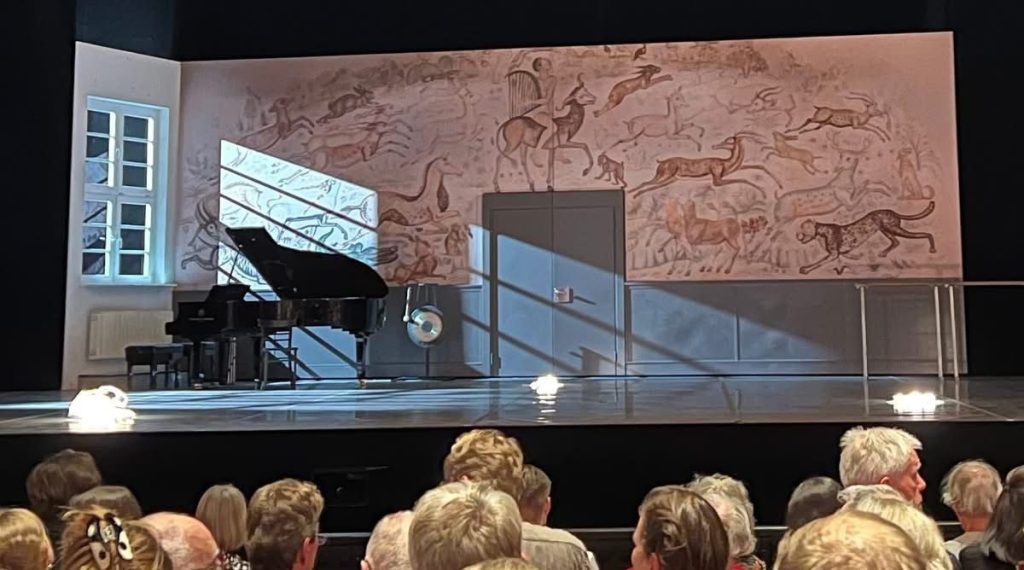
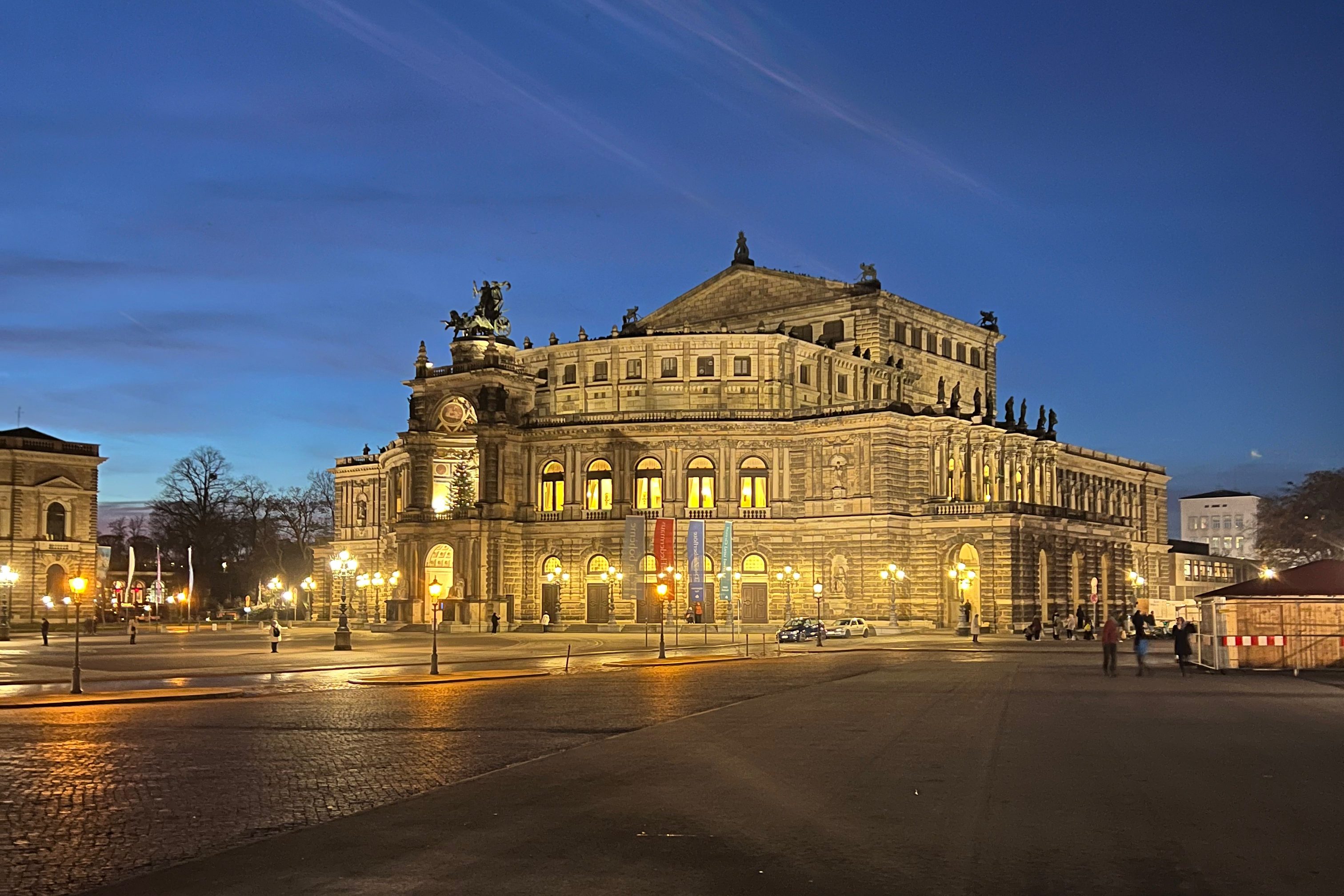
Two of the opera houses I have frequented most in recent years are the Hamburgische Staatsoper and the Semperoper Dresden. As we prepare to slide into 2026, and as I mentally survey the many performances I attended in 2025, concerts, ballets, operas, and theatre productions alike, two events continue to resurface as particularly formidable and significant, at the same time innovative and pure, and artistically delightful.
Every cultural experience enriches our lives, and it remains a genuine privilege to have one’s year studded with artistic jewels, moments that allow us to feel, to wonder, to reflect, and to be at once enchanted, disturbed, and carried beyond the familiar.
The two productions I single out here affected me on markedly different yet equally deep levels. Both stand as impressive examples of classical art forms that maintain the highest standards of excellence while never losing sight of their obligation to communicate, to engage, and to entertain a broad audience.
Die Unsichtbaren (The Invisibles)
Die Unsichtbaren (The Invisibles) confronts history directly, revisiting the atrocities of the Nazi era through a striking mélange of ballet and theatre. The work interweaves choreographed movement with spoken text and documentary material, incorporating readings from official records and archival documents.
It commemorates artists, journalists, dancers, choreographers, photographers, and intellectuals who, in the turbulent years following the First World War and throughout the Third Reich, were dismissed from their positions, professionally restricted, forced into exile, murdered alongside their families, or who simply vanished without a trace under the mechanisms of National Socialist persecution.
Die Unsichtbaren is remembrance rendered through art: beautiful, unsettling, and deeply human. Ballet dancers are required to speak and act; actors embody dancers; dry, harrowing yet brutally factual archival records are embedded within a theatrical framework that gives emotional immediacy to historical fact. The result is a powerful confrontation with the past that refuses abstraction and insists on empathy.
At its heart, however, it remains a ballet, carried by the exceptional precision, expressive clarity, and emotional intelligence of the Bundesjugendballett, whose dancing anchors the theatrical conception with artistry of the highest calibre.
Die Unsichtbaren received its world premiere at the Ernst Deutsch Theater in Hamburg in 2022; I encountered the work for the first time on the main stage of the Hamburgische Staatsoper in the summer of 2025, where its scale and impact were further amplified. The dancers of the Bundesjugendballett delivered stunning performances and impressed me not only with the elegance, skill, and artistry of their movements, but also with their acting talent!
As for the actors involved, Louisa Stroux and Maximilian von Mühlen narrated the storyline and gave the production an impactful frame, while interpreting various different personas. Isabella Vértes-Schütter’s magnificent portrayal of the late dancer and choreographer, Mary Wigman, crowned this already extraordinary production.
After the performance of „Die Unsichtbaren“ on the big stage of the Staatsoper Hamburg, the sold-out house applauded the cast and crew for several minutes in an emotional standing ovation that the production more than merits. Bravo to John Neumeier for having the courage and the inspiration to bring this choreographed slice of history to life. Bravo to everyone who made this production possible. Bravo for remembering, and thank you for this unforgettable tribute!
The Snow Queen
If Die Unsichtbaren confronts history directly, the contemporary opera, The Snow Queen, tackles retelling a fairy tale with sophistication and novelty. Hans Abrahamsen’s contemporary score is paired with a narrative familiar to many from childhood, yet the production achieves a remarkable balance between fidelity to Hans Christian Andersen’s original tale and the musical and visual richness one might associate with Hollywood-scale modern fantasy.
The orchestral music and the voices are central, of course, and it is enthralling to hear this contemporary composition that plays so beautifully with the time and tempo, that accentuates the phrasing and makes it so expressive, and that feels melodic and serene, even when it is disturbing.
But The Snow Queen also works on every other level of a quality production that is wide ranging and entertaining all-around. The acting, the choreography, the scenography, the meticulously conceived costumes, and the imaginative use of space and backdrops also play a central role in the artistic moment created. What makes this production especially compelling is how it embraces diverse forms of artistic expression. Dance is woven into the operatic fabric. Dancers inhabit the opera. Singers are frequently required to move, and sometimes dance, with impressive physical exertion.
The chorus of flowers in the old woman’s garden, for example, offers not only musical excellence, but an extraordinary theatrical performance, their movement imitating the vacillations and staccato rhythms of flowers caught in shifting currents of air. And the crows?! Unforgettable! It is rare to witness an opera singer hopping, dancing, and fully embodying character while maintaining vocal precision. The effect is exhilarating. The work entertains, but it also provokes thought, reminding us that fairy tales endure precisely because they accommodate psychological depth and moral ambiguity.
The Snow Queen was first performed in Denmark in 2019, but it was the Semperoper Dresden premiere in December 2025 that I attended, a production that left an indelible impression on me.
It has been some time since I encountered such successfully realized storytelling, productions that insist on excellence within their respective disciplines, while embracing theatricality, imagination, and audience engagement without compromise.
 Cultureum
Leave a comment