

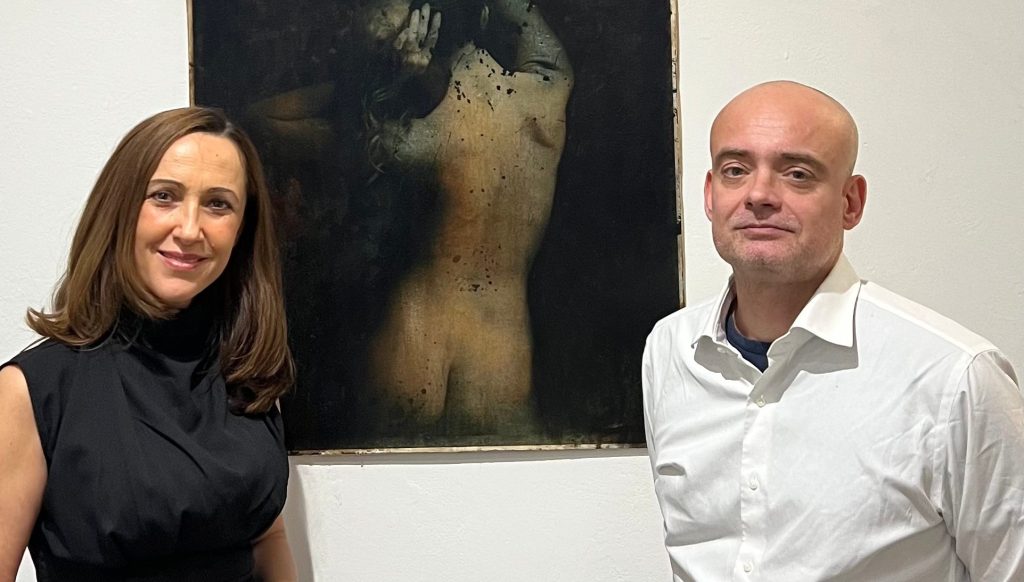
Fabien Dettori brings photography and painting together and concentrates on offering visual creations that can be sorted into two of the most prominent traditions in fine arts: the female nude and still lifes.
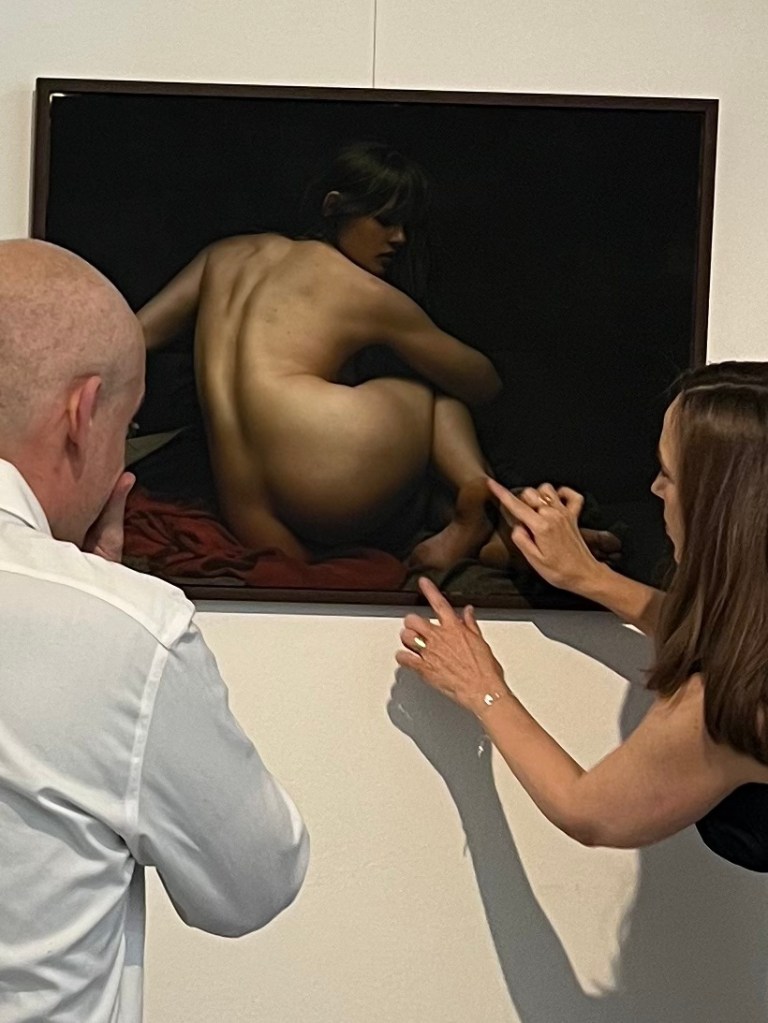
Fabien Dettori offers some large-scale paintings that evoke neoclassical lines and figures, and portray magnificent modern art works with a classical touch, but most of his pieces are small and intimate, like jewels that you can display on your wall. While his large-scale works resemble museum pieces or valuable possessions displayed in elegant homes that have the space and the grandeur for them, his smaller paintings, with the frame bearing semblance to the outlines of an old-fashioned camera, come across as precious depictions of the artist’s mind’s eye.
There is something very elegant about Fabien Dettori’s work. It is reminiscent of the 19th century painters he admires, but throws in the mix some expressionism, surrealism, and figurative painting, and offers the layering and the modern glance of a former fashion photographer.
But what does he actually do?
Fabien Dettori allows himself one shot with his Polaroid camera, one attempt to capture an image at a particular moment, frozen in time. Only, afterwards, he invites time back in, to shape and transform the image, let it age and bear the signs of light, humidity, differing temperatures, and sometimes even of destruction (because Fabien has been known to damage or tear his pictures, only to repair them in Kintsugi tradition with a golden thread, or gold foil sheets).
In the next step, he adds layers to his photograph, through paint, walnut stain, bitumen, or Indian ink. Once he is satisfied with his creation, he finally fixes it for eternity with a layer of varnish.
The use of gold in Fabien’s works of art goes beyond mere restorative efforts. The golden lines that result from repairing a photograph acknowledge and revere flaws, such as wrinkles, spots, and folds, naturally caused by time. The gold foil sheets that are applied accentuate certain features of the image, play with its luminosity, and elevate it beyond time, into a metaphysical realm, where its psychological and mythical quality can shine.
In this way, a photograph of a half-eaten fish that had been left out to rot and stink until the perfect light would hit it on the kitchen table and its beauty and essence could be capture with one click of the camera, can be eternalized through a golden layer that allows it to shimmer and reflect with a divine allure. In a similar way, intimate body parts and erotic positions are taken beyond the vulgar into timelessness and godliness.
But how does Fabien treat his female subjects?
Fabien Dettori’s approach with his female subjects is one based on respect and trust, and on a joint commitment to the artistic endeavor at hand. His models are not paid and are expected to wish to partake in the project for the sake of the experience. However, they are to believe in the integrity and value of the resulting product and to be rewarded for it; all of Fabien’s models receive 10% of the final sale of each art work that their image is portrayed in.
His models are never asked to pose in a certain way, as this, according to Fabien, would objectify them and also inhibit the flow of the creative process. Models are simply observed as they do what they feel like, and the exceptional, poetic, or erotic moments are then captured by the attentive photographer who wishes to empower them in their nudity. The resulting works consequently reflect intimacy and passion, but are never vulgar.
It is almost impossible to appreciate Fabien Dettori’s creations if you do not see them and hold them, and often actually touch them yourself. There is a gentle splendor to them that I hope you will be able to experience one day live.
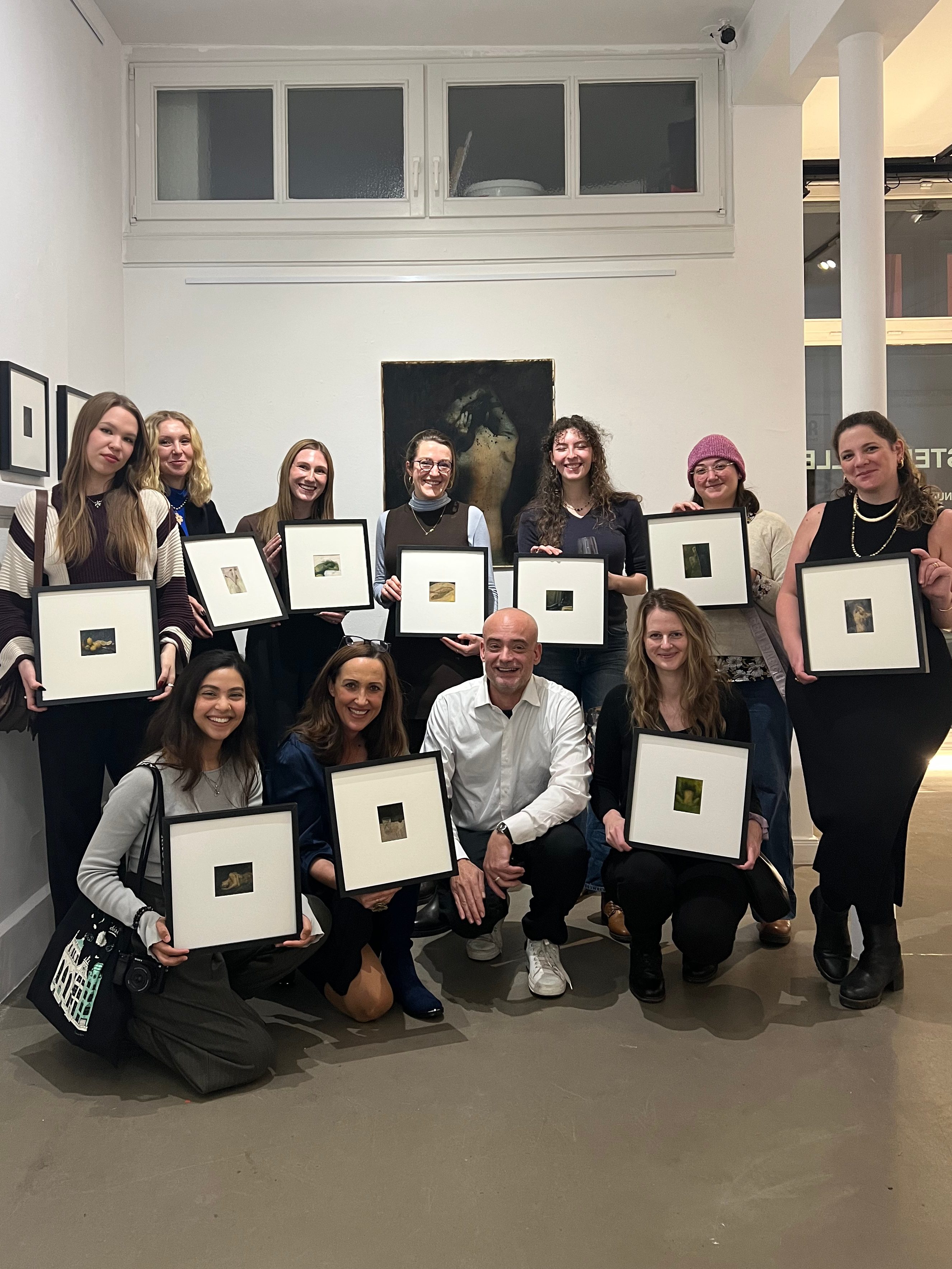
I had the privilege to experience Fabien Dettori’s works of art at the end of January 2026, when I visited him at a pop-up gallery called the Little Sister Gallery in the Schanzenviertel in Hamburg. Bravo, by the way to Sabela García Cuesta and Fabian Schmidt, the initiators and organizers of this temporary gallery that features a different artist each week all the way up to 26 März 2026. What an innovative way to showcase artists in this iconic neighborhood in Hamburg.
I attended the vernissage of Fabian Dettori’s solo exhibition, Fragments, alongside several ladies from the BBA Community, a group for “ambitious international women in Germany,” and decided to register as a member with them right away. It was interesting to hear their viewpoints on Fabien’s work and to feel at home in the company of other TCKs and expats in Germany.
I hope you, too, will have the chance to catch Fabien at one of his many exhibitions, whether in Berlin, Venice, New York, Brussels, Paris, or in another world metropolis. Perhaps you will decide to be a model for him and join him in this experience. Or perhaps you will simply run into him in Paris as he is searching for wooden pieces he can use to frame his gorgeous creations in. Either way, I hope you get to meet him and experience his art up-close and personal. For me, it has been a delight to have done so.
You can find my full interview with Fabien Dettori on my website, cultureum.com, or on my YouTube channel @cultureumdrj. It bears the same title as this article.
Upcoming Solo Exhibition:
In Paris
Saint-Germain-des-Prés
24 – 29 March 2026
In Venice
parallel to the Venice Biennale
at the Blue Gallery
4 – 14 May 2026
Fabien Dettori
Instagram: @dettorifabien
Email: galeriechapon@gmail.com
Management : Chloé Guisan @chloeguisan
 Cultureum
Leave a comment